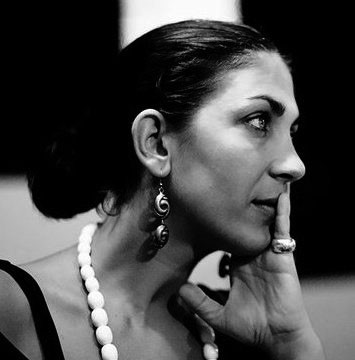
Giuliana Ciancio
Giuliana Ciancio is a postdoc researcher, curator, cultural manager and lecturer in the live performing arts.
In her PhD – titled “Cultural policy and emotional clusters in the post-global context.Performing arts and emotions between top-down and bottom-up negotiations” – Giuliana focuses on the role that emotions play in the negotiations between top-down cultural policymaking and bottom-up cultural practices. The EU Creative Europe programme, with the implementation of its Audience Development (AD) priority, and the city context of Naples, with its season of the commons, are the two key case studies.
Starting from the performing arts sector, on the one hand, she analyses the various forms of cultural participation and civil engagement in their mutations in a period of significant global phenomena between the 2008 financial crisis and the one starting with the global spread of the Covid-19 virus in 2020. On the other hand, she looks at the behaviors embraced by policymakers, activists, political actors, artists, curators, cultural professionals, the change of emotional status and hence the impact of the latter on the cultural policymaking. So, while scrutinizing the global interdependency in which these participatory practices have grown, flying into personal attitudes and beliefs, she questions if we are going into a new phase defined as a post-global condition.
Being profoundly convinced of the key role of cultural cooperation in the development of nowadays societies, together with her research path, in her career Giuliana has been also the co-author and curator of awarded project proposals at national and European level. Since 2014, she is the co-curator and project manager of “Be SpectACTive!”, an EU-funded large-scale project on active spectatorship in the performing arts sector realized together with 19 partners in 15 European countries. In 2018 she founded the Italian social enterprise Liv.in.g. (Live Internationalization Gateway) aiming to support cultural organizations in international cultural cooperative processes.
(photo: Vitor Barros)